The internet is now a major part of everyday life for young people. From social media and gaming to messaging apps, livestreams, online communities, and school group chats, teenagers are spending more time online than ever before.
Technology creates incredible opportunities. Young people can learn new skills, build friendships, explore interests, and connect with communities around the world. But alongside these opportunities come very real dangers.
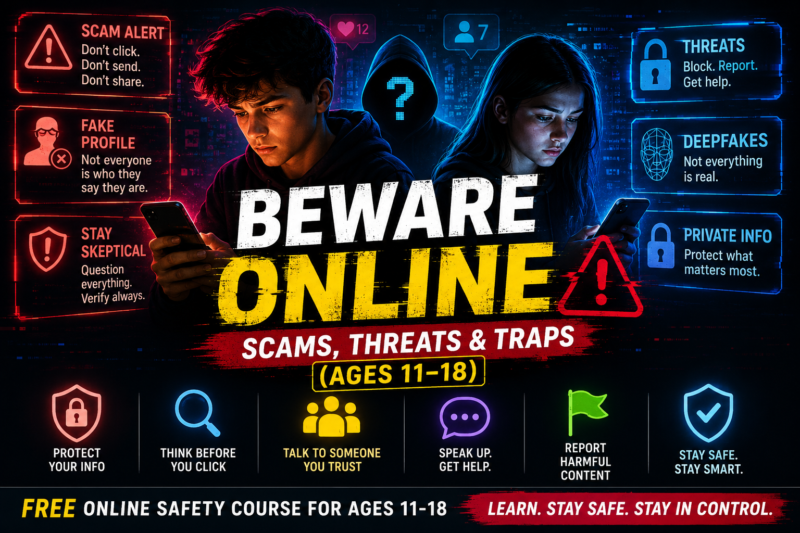
Online Safety for Teenagers in 2026 has changed dramatically in recent years. The risks facing young people in 2026 are very different from those parents experienced growing up. Online dangers no longer just involve strangers in chat rooms or weak passwords. Teenagers now face sophisticated scams, deepfakes, fake accounts, online grooming, AI generated misinformation, cyberbullying, sextortion, and growing pressure from social media.
For parents, teachers, and safeguarding professionals, keeping up with modern digital risks can feel overwhelming. For teenagers, understanding how these threats work is becoming an essential life skill.
The good news is this:
Knowledge changes everything.
The more young people understand online safety for teenagers, the harder it becomes for scammers, manipulators, fake accounts, and harmful individuals to influence them.
Why Online Safety for Teenagers Matters More in 2026
Teenagers today live in an always connected world.
Many young people spend hours every day using:
- TikTok
- Snapchat
- Discord
- YouTube
- Roblox
- Fortnite
- Minecraft
- FIFA
- GTA
- Livestream platforms
- Gaming communities and group chats
These spaces can be positive, creative, and supportive. They help teenagers build friendships, express identity, and find communities with shared interests.
But modern online risks rarely arrive looking dangerous.
Instead, threats often appear as:
- Friendly messages
- Exciting opportunities
- Viral trends
- Free rewards
- Fake friendships
- Emotional support
- Funny memes or videos
Many online dangers targeting teenagers rely on psychology rather than technology.
Scammers, manipulators, and harmful people often use:
- Urgency
- Fear
- Excitement
- Curiosity
- Emotional pressure
- Trust
This is why online safety for teenagers is no longer just about technology.
It is about awareness, emotional intelligence, and critical thinking.
Online Scams Targeting Teenagers Are Growing Fast
One of the biggest concerns in online safety for teenagers is the rapid rise of scams aimed directly at young people.
Teenagers are targeted because scammers know:
- Young people spend time online
- Gaming rewards are appealing
- Social media moves quickly
- Teenagers often trust friendly people
- Emotional reactions happen fast
Modern scams targeting teenagers are becoming smarter and more personalised.
Fake Gaming Rewards
Messages offering:
- Free Robux
- Free V Bucks
- Rare skins
- Exclusive upgrades
- Unlimited coins
Are among the most common online scams targeting teenagers.
Many fake links steal:
- Passwords
- Account access
- Personal information
A simple rule helps:
If someone promises unlimited free rewards, it is almost certainly fake.
Fake Giveaways and Competitions
Teenagers are often targeted by competitions offering:
- Gaming consoles
- Phones
- Cash prizes
- Designer trainers
- Headphones
Scammers frequently request:
- Personal information
- Payment for fake delivery fees
- Login details
Legitimate companies rarely contact young people privately asking for payment.
Fake Friend Messages
Some of the most convincing scams appear to come from people teenagers already know.
A hacked account might message:
“Can you send me that code quickly?”
Or:
“Vote for me in this competition.”
Because the message feels familiar, teenagers often trust it.
Pausing before reacting is one of the strongest online safety habits young people can build.
Deepfake Dangers for Teenagers Are Increasing
Another growing issue in online safety for teenagers is the rise of deepfakes and AI generated content.
Artificial Intelligence now makes it possible to create:
- Fake videos
- Fake voice messages
- Fake photos
- AI generated identities
- Realistic impersonations
This means seeing or hearing something online is no longer proof that it is real.
Teenagers may come across:
- Fake celebrity videos
- Edited voice recordings
- Manipulated images
- Deepfake bullying content
- Fake rumours spread through video
Even ordinary selfies can sometimes be misused.
This creates new concerns around deepfake dangers for teenagers, especially when images or voices are shared publicly.
Young people should learn to ask:
- Could this be edited?
- Is this trying to shock me?
- Does this feel emotionally manipulative?
- Is there evidence this is real?
Critical thinking has become one of the most important online safety skills.
Social Media Safety for Teens
Social media plays a huge role in teenage life.
It allows young people to:
- Stay connected
- Share creativity
- Build friendships
- Learn new things
- Follow interests
But social media safety for teens matters because platforms are designed to maximise attention.
Algorithms often prioritise content that triggers:
- Anger
- Excitement
- Shock
- Fear
- Drama
This affects emotional wellbeing more than many people realise.
Comparison Pressure
Teenagers often compare themselves to:
- Filtered images
- Edited bodies
- Influencers
- Perfect looking lifestyles
But social media rarely shows reality.
Many images are:
- Edited
- Filtered
- Carefully selected
- AI enhanced
Real life rarely looks like a highlight reel.
Pressure To Always Be Available
Many teenagers feel pressure to:
- Reply instantly
- Stay online
- Join every chat
- Keep streaks going
- Constantly post
Over time, this affects:
- Sleep
- Mood
- Confidence
- Focus
Healthy digital boundaries matter.
Cyberbullying and Online Pressure
Cyberbullying remains a major issue affecting online safety for teenagers.
This can include:
- Rumours
- Mocking comments
- Screenshots
- Exclusion
- Harassment
- Public embarrassment
Unlike traditional bullying, online bullying often follows young people home.
This makes emotional resilience extremely important.
Online Grooming Warning Signs
One of the most serious concerns in online safety for teenagers is online grooming.
Grooming happens when someone builds trust with a young person to manipulate or exploit them.
The danger is that grooming rarely begins in an obvious way.
It often starts with:
- Friendly conversations
- Shared hobbies
- Gaming friendships
- Emotional support
- Compliments
The person may seem kind, funny, or understanding.
But warning signs include:
- Asking personal questions early
- Encouraging secrecy
- Becoming emotionally intense very quickly
- Asking for photos
- Moving conversations to private apps
- Suggesting offline meetings
Teenagers should remember:
Healthy relationships do not rely on pressure or secrecy.
Understanding online grooming warning signs can protect young people from serious harm.
Fake Accounts and Online Deception
Fake profiles are now everywhere.
Many use:
- AI generated faces
- Stolen photos
- Fake identities
- Fake stories
Their goals may include:
- Scams
- Grooming
- Emotional manipulation
- Blackmail
- Catfishing
Warning signs include:
- Very few posts
- No genuine interaction
- Fast emotional closeness
- Refusing video calls
- Asking personal questions too quickly
Teenagers should understand that shared interests do not automatically mean someone is trustworthy.
Trust should grow slowly.
Gaming, Discord and Online Communities
Gaming communities are a huge part of teenage life.
Platforms such as Discord and multiplayer games help young people:
- Make friends
- Collaborate
- Build teamwork skills
- Enjoy shared interests
But online communities can also expose teenagers to:
- Toxic behaviour
- Strangers pretending to be teens
- Grooming risks
- Fake friendships
- Group pressure
Gaming safety matters just as much as social media safety.
Teenagers should avoid sharing:
- School names
- Home locations
- Personal routines
- Phone numbers
Even inside communities that feel familiar.
Building Digital Resilience in a Connected World
One of the most important parts of online safety for teenagers is digital resilience.
Digital resilience means:
- Staying calm online
- Recovering from negative experiences
- Recognising manipulation
- Thinking critically
- Setting healthy boundaries
- Knowing when to ask for help
Teenagers do not need to be perfect online.
Everyone makes mistakes.
What matters most is learning how to respond safely.
Healthy habits include:
- Strong passwords
- Private accounts
- Two factor authentication
- Taking screen breaks
- Limiting personal information
- Talking to trusted adults
- Questioning suspicious content
Confidence grows through awareness.
Start Our Free Online Safety Course for Ages 11 to 18
To help young people better understand online safety for teenagers, we have recently updated our completely free course:
Free Course – Beware Online: Scams, Threats & Traps (Ages 11–18)
The course was fully updated in June 2026 to reflect the latest digital risks affecting teenagers today.
It covers:
- Online scams targeting teenagers
- Deepfake dangers for teenagers
- Online grooming warning signs
- Social media safety for teens
- Fake accounts and misinformation
- Gaming, Discord, and online communities
- Screen time and mental wellbeing
- Digital resilience and online confidence
- Emergency online safety actions if something goes wrong
The course has been designed to be practical, realistic, and age appropriate for young people aged 11 to 18, while also helping parents, teachers, and safeguarding professionals better understand the online risks facing teenagers in 2026.
The goal is simple:
To help young people stay safer, think critically, and navigate the digital world with confidence.
Final Thoughts
Online safety for teenagers matters more than ever.
Technology will continue changing. AI will continue evolving. Social media platforms will keep growing.
But awareness remains powerful.
Teenagers who understand scams, deepfakes, grooming tactics, fake accounts, and online pressure are much harder to manipulate.
Parents and teachers who understand modern online risks are better equipped to guide and protect young people.
Because online safety is not about fear.
It is about confidence, awareness, and staying in control.
Parents and carers looking for additional support can also explore trusted guidance from the NSPCC Online Safety Advice Hub alongside this free course.
Updated June 2026.