AI can produce pictures, songs, poems and videos in seconds. As these tools improve, our screens and playlists could become increasingly crowded with generated content.
But could that abundance strengthen our appreciation of human creativity in the arts? When images and music can be produced almost instantly, knowing that somebody painted the picture, wrote the lyrics or played the instrument may become even more meaningful.
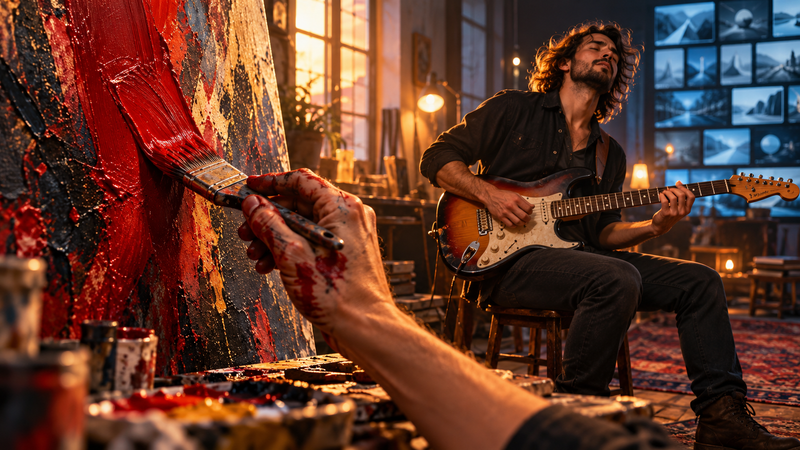
Human creativity remains central to the arts. The question is whether growing exposure to AI content will encourage audiences to value the people, skills and experiences behind creative work even more.
There are already encouraging signs that human involvement matters to audiences, alongside opportunities for artists and musicians to make that connection more visible.
The person behind the work
We rarely experience art entirely separately from its creator. A song can mean more when we understand what inspired it. A painting can become more interesting when we see the artist’s sketches and decisions.
Watching somebody perform a difficult guitar passage gives us an appreciation of skill developed through years of practice. We recognise the effort, personality and judgement involved.
AI can generate work that audiences find attractive or moving. Yet a convincing song about bereavement and one written by somebody describing their own loss can carry different significance.
The story behind the work matters. As polished output becomes easier to obtain, that human connection could become an even greater part of its appeal.
Banksy and the importance of being there
Banksy provides a useful example. The impact of an artwork can depend on its wall, location, timing and the decision to place it there. Its appearance in a public space becomes part of the experience.
An image generator can imitate a visual style, but generating a picture does not put paint on a wall. It does not reproduce the physical intervention, the encounter with passersby or the relationship between the artwork and its surroundings.
The same principle extends beyond street art. A sculpture, a painted canvas or a live performance has a physical presence that a generated image alone cannot provide.
An original painting is more than an image
An original painting offers the artist’s physical marks, materials, decisions and personal expression. Its texture, scale and surface are part of the work.
AI can generate a picture and reproduce the appearance of brushwork. That image can be printed or displayed digitally, but a print does not become an original painted canvas.
AI can produce new visual combinations, so dismissing every generated image as unoriginal would be too sweeping. However, the system has no personal memories or lived experiences motivating its choices.
For buyers who value the artist’s involvement, owning the physical result of somebody’s creative process offers something distinctive. Greater availability of generated images could make those qualities more appreciated.
Evidence that human authorship matters
A Creative Industries Policy and Evidence Centre discussion paper published in September examined whether authorship influences value. Researchers used experimental auctions to compare consumer valuations of human and AI generated images and poetry, offered as prints and on mugs.
Among a broad UK population sample, participants valued human work more highly. The youngest participants showed no such premium, suggesting that preferences differ between audiences.
The study provides evidence that how something was created can influence what people will pay. Its findings concern particular products and experimental purchasing decisions, rather than the entire art market.
Music listeners want a human option
The Nordic Digital Music Survey published this September found that 54% would prefer a streaming service containing only human made music.
Meanwhile, 74% wanted the option to exclude AI generated music from playlists, recommendations and discovery features. Some 77% wanted music created by AI without human creativity clearly identified.
These findings suggest an appetite for choice and transparency. Artists and platforms have an opportunity to help listeners understand who wrote, performed and produced the music they hear.
That information allows audiences to support the creative involvement they value.
When precision starts to sound mechanical
Some AI generated music on YouTube can sound mechanical to a careful listener. Precise note patterns, relentlessly even timing and instruments that sound almost too perfect can leave a performance feeling programmed.
The notes may fit, yet the phrasing can seem to lack emotional purpose. A guitar solo can contain impressive runs without giving the impression that the player has anything to say.
Experienced musicians may quickly notice what feels absent: a drummer pulling against the beat, a guitarist bending a note with individual character, or a singer changing the weight of a phrase.
Artists may recognise a similar quality in images that look accomplished but feel generic.
These are judgements about expression, rather than reliable tests of AI involvement. Human performances can be heavily edited, and AI can imitate imperfections. Nevertheless, technical polish and emotional expression are different qualities.
Enjoying a track and following an artist
Research described by the University of Dayton adds another perspective. While 88% of participants initially expressed a preference for human music, that preference did not persist in enjoyment ratings after listening.
Participants remained less willing to publicly endorse music identified as AI generated.
Somebody might enjoy a generated track in the background without wanting to follow its fictional performer, recommend it to friends or buy merchandise.
Human musicians build relationships through their personalities, performances and experiences. An enjoyable recording is one part of that relationship.
Live performance makes human creativity visible
Live performance allows audiences to experience human involvement directly. Musicians respond to one another, singers interpret familiar songs differently, and performers make decisions in the moment.
Rehearsal footage, studio sessions, workshops and demonstrations can reveal the skill behind the finished work. Sketches and recordings of a painting taking shape offer a similar connection.
These activities give artists ways to communicate what makes their work distinctive. They also allow audiences to participate in an experience that extends beyond receiving a finished image or recording.
A stronger appreciation of human creativity in the arts
Human creativity in the arts has an enduring place in our lives. AI adds another source of content, while raising fresh questions about what we value and why.
Artists may also use AI for supporting tasks without handing over their creative decisions. Clear descriptions of that involvement can help audiences understand the contribution of both the person and the technology.
As AI becomes part of everyday life, understanding what it can produce is only part of the picture. We also need to recognise what people value in human skill, expression and experience. Exploring those changes is part of what we do at AI Tuition Hub.
The paint on a canvas, the character of a guitar phrase and the experience behind a lyric give audiences reasons to connect. As generated content becomes more abundant, those qualities could command even greater attention and support.
Published: 29th October 2026.