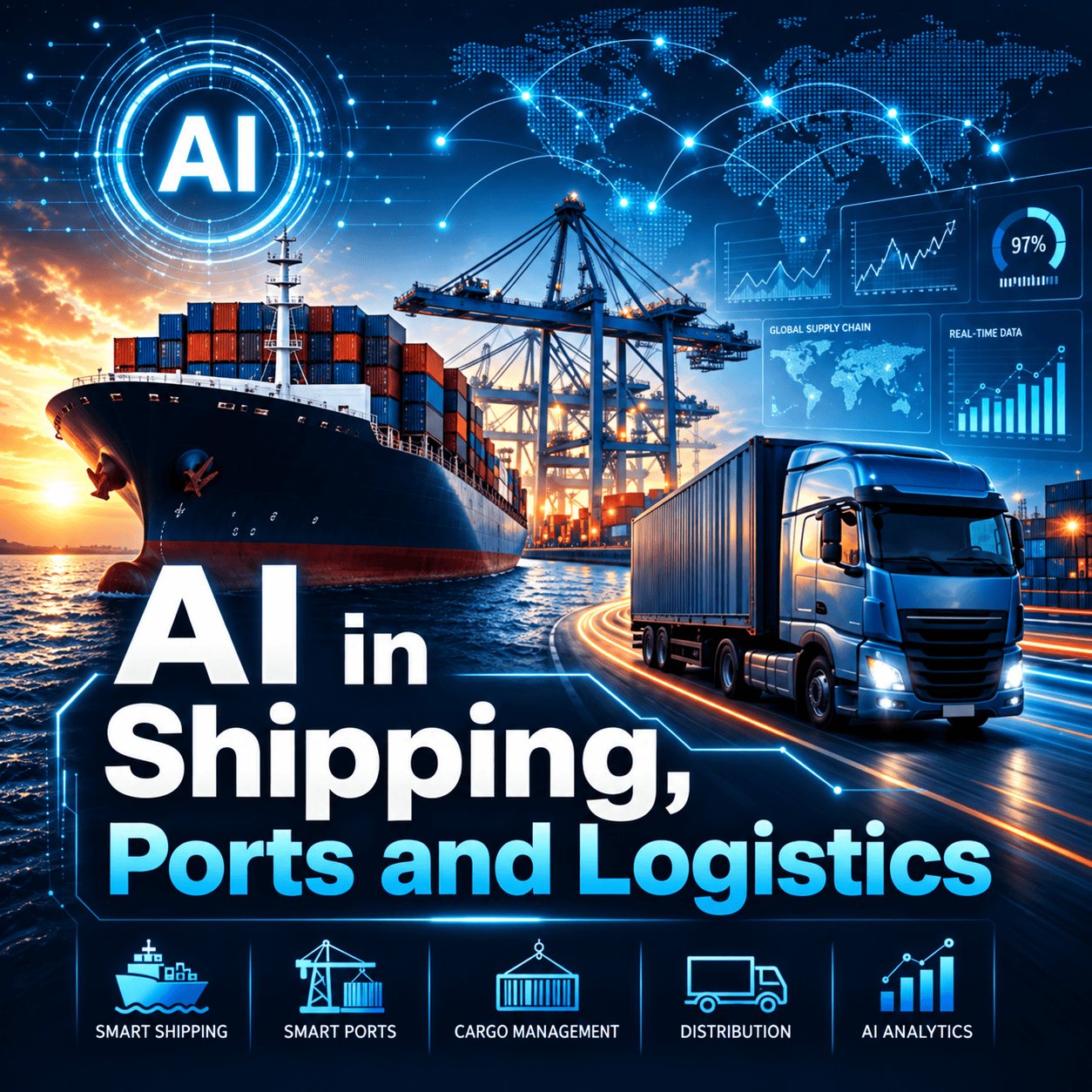
🚢 AI in Shipping, Ports and Logistics
About Course
Global trade depends on an interconnected network of vessels, ports, warehouses, freight operators, customs authorities and inland transport systems. Disruption at one point can affect production, availability and prices across several countries, making accurate information and effective coordination essential.
This course examines how AI is being applied throughout shipping, ports and logistics. It explores voyage optimisation, fleet performance, fuel efficiency, predictive maintenance, smart ports, container handling, warehouse automation, inventory management and supply chain risk analysis.
Learners will also examine the technologies supporting these developments, including machine learning, computer vision, AI agents, robotics and digital twins. The course considers how digital standards and connected data allow organisations to improve cargo visibility, anticipate disruption and coordinate activity across complex international networks.
The final part of the course looks at autonomous vessels, Remote Operations Centres and the emerging international framework governing AI enabled shipping. Throughout, attention is given to cybersecurity, environmental performance, workforce change, accountability and the continuing importance of human expertise within increasingly automated maritime and logistics operations.
Course Content
Intelligent Shipping, Ports and Logistics
-
Understanding AI in Global Shipping and Logistics
-
AI for Route Planning, Fleet Operations and Fuel Efficiency
-
Smart Ports, Container Terminals and Cargo Management
-
AI in Warehousing, Distribution and Supply Chains
-
AI, Autonomous Shipping and the Future of Global Trade