🕵️♂️ AI and the Future of Crime and Policing
About Course
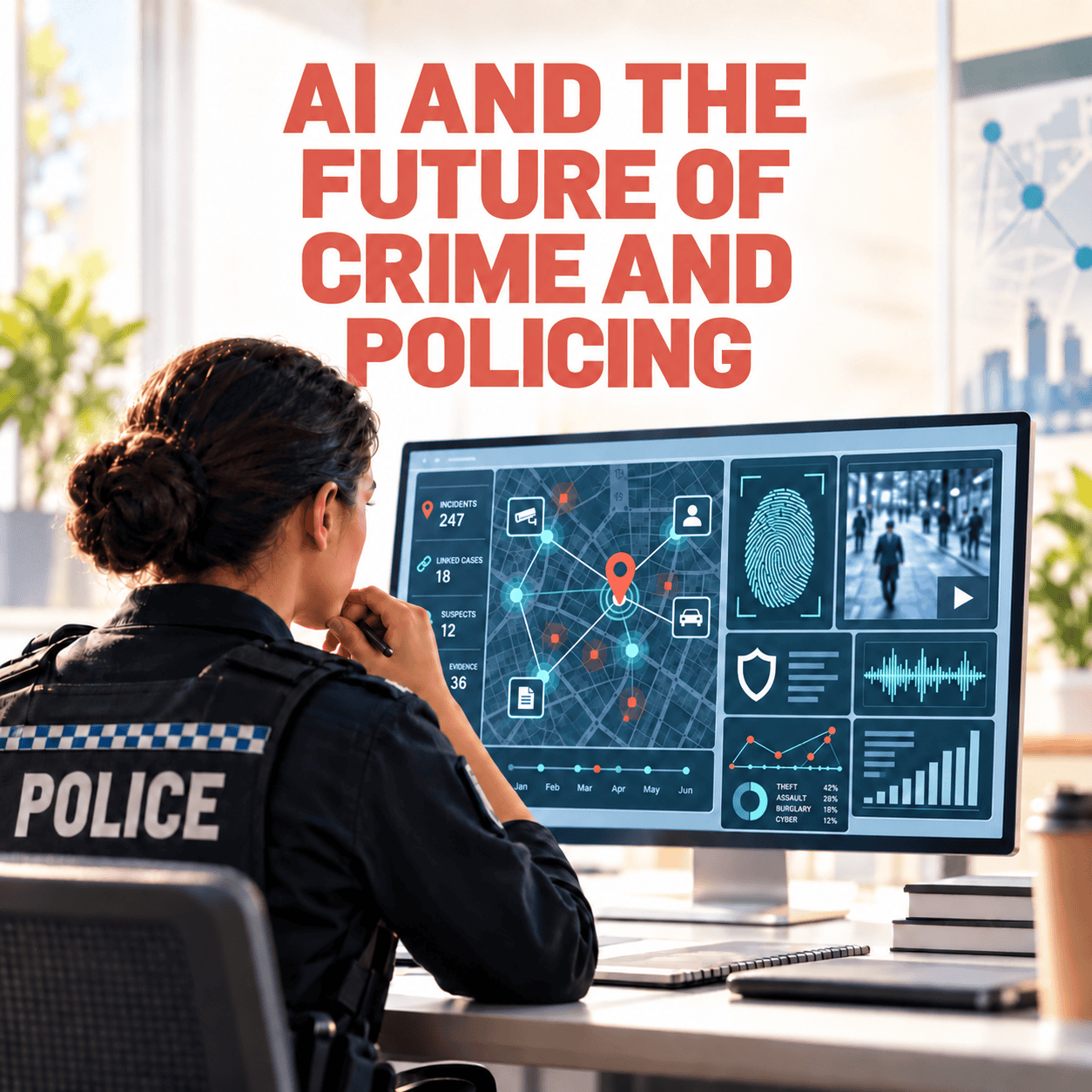
Artificial intelligence is changing both crime and policing. Criminals are using AI to scale fraud, create deepfakes, automate cyberattacks and construct convincing digital identities, while law enforcement agencies are adopting the same technology to analyse evidence, identify patterns and coordinate complex investigations.
This accessible, non-technical course examines predictive policing, AI driven scams, cybercrime ecosystems, digital surveillance, investigative assistance and international cooperation. It also explores how AI supports emergency response, evidence authentication and the detection of synthetic media.
The course takes a balanced and realistic approach. AI can process information at extraordinary speed, but it can also produce false matches, reinforce historical bias and encourage excessive reliance on automated recommendations. Human judgement, due process, transparency and public accountability therefore remain essential.
Looking towards the future, you will consider how AI agents, connected policing systems and greater automation may reshape police work, specialist roles and public safety. Rather than relying on hype or distant speculation, the course explains what is already happening, what is developing now and which legal and ethical questions must be addressed as these technologies become more powerful.
Course Content
🌐 AI and the Future of Crime and Policing
-
Predictive Policing and Intelligence-Led Crime Prevention
-
AI-Driven Scams, Deepfakes, and Social Engineering
-
Cybercrime Ecosystems and Automated Attacks
-
Digital Policing and Real-Time Surveillance Tools
-
AI as an Investigative Assistant: Case Building and Evidence Analysis
-
Cross-Border Crime, Global Investigations, and AI Coordination
-
Ethics, Bias, Due Process, and Rights Considerations
-
AI in Emergency Response, Crisis Prediction, and Public Safety
-
Authentication, Digital Evidence Integrity, and Deepfake Detection
-
The Future of Policing: AI-Driven Capabilities, Workforce Transformation, and Operational Evolution