AI Risk Management in 2026 involves the structured identification, assessment and mitigation of risks arising from artificial intelligence systems within organisations. It includes governance frameworks, human oversight, regulatory compliance and operational monitoring designed to reduce legal, financial and reputational exposure.
AI Risk Management in 2026 Framework
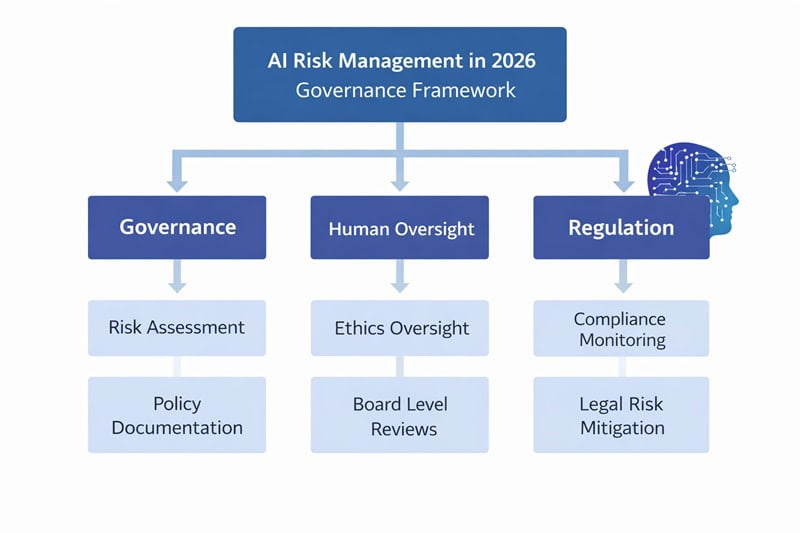
AI Risk Management in 2026 is no longer optional for organisations deploying artificial intelligence systems. Regulatory scrutiny is increasing globally, particularly following the introduction of the EU AI Act.
With adoption accelerating, risk exposure is increasing.
AI risk management is now a board level issue.
This guide explains what organisations must implement to remain compliant, resilient and competitive.
Why AI Risk Management Is Now Essential
Three developments have changed the landscape:
- Global regulatory expansion
- Increased scrutiny of automated decision systems
- Real world cases of AI bias, misinformation and operational failure
Organisations that treat AI as simple software underestimate the legal, reputational and financial risks involved.
AI introduces risks across:
• Data privacy
• Bias and discrimination
• Cybersecurity
• Intellectual property
• Operational reliability
• Reputational exposure
Managing these risks requires structured governance.
Core Components of an AI Governance Framework
An effective AI governance framework in 2026 should include:
1. AI Risk Assessment Process
Every AI system should undergo formal risk evaluation before deployment.
This includes:
• Identifying data sources
• Evaluating potential bias
• Assessing impact severity
• Reviewing regulatory exposure
• Defining accountability
High impact systems require deeper scrutiny.
2. Clear Human Oversight
No organisation should allow fully autonomous decision making in high consequence areas.
Human review mechanisms must be defined for:
• Hiring decisions
• Financial approvals
• Medical or educational outcomes
• Legal recommendations
Human oversight reduces liability and improves trust.
3. Data Governance and Documentation
Documentation is no longer optional.
Organisations must maintain:
• Model purpose statements
• Data usage records
• Audit trails
• Version control logs
• Output validation procedures
If regulators request evidence, documentation determines compliance.
4. AI Policy and Internal Controls
Every organisation deploying AI should maintain a written AI policy covering:
• Acceptable use
• Prohibited applications
• Data protection requirements
• Transparency standards
• Employee responsibilities
Without internal policy, risk multiplies.
Our course AI Regulation and Governance for Professionals provides structured templates and frameworks for implementing these controls.
Regulatory Pressure in 2026
Governments across major economies are strengthening AI oversight.
Key trends include:
• Mandatory risk classification
• Transparency requirements
• Penalties for non compliant systems
• Data localisation obligations
• Increased enforcement powers
Even organisations operating internationally must understand jurisdictional overlap.
For a broader understanding of regulatory shifts, read our analysis:
Global AI Regulation in 2026: What New Laws Mean for Businesses and Professionals
Common AI Risk Management Mistakes
Many organisations:
• Deploy AI without formal approval processes
• Assume vendors carry all legal responsibility
• Ignore bias testing
• Fail to train staff on AI limitations
• Underestimate reputational damage
AI risk management is not only legal protection. It is brand protection.
Building Organisational Capability
Risk management cannot sit only within IT.
It requires cross functional awareness including:
• Leadership
• Legal
• Compliance
• Operations
• HR
• Finance
If your team lacks foundational AI literacy, begin with AI for Absolute Beginners before moving into advanced governance training.
For finance heavy organisations, pair governance training with AI in Financial Data Analysis and Market Intelligence to understand operational implications.
The Strategic Advantage of Responsible AI
Organisations that implement structured AI governance gain:
• Stronger stakeholder trust
• Reduced regulatory exposure
• Clearer accountability
• Faster adoption confidence
• Competitive differentiation
Responsible AI is becoming a market advantage, not just a compliance requirement.
Final Thoughts
AI risk management in 2026 is not optional.
It is a structural requirement for any organisation deploying artificial intelligence in customer facing, operational or strategic roles.
The organisations that will thrive are those that integrate governance early rather than react to regulatory penalties later.
If you want structured frameworks rather than fragmented online advice, explore the AI governance and compliance courses inside AI Tuition Hub and build capability that protects and scales your organisation.