A year ago, much of the discussion about AI and finance still revolved around what might happen. In 2026, there are more practical examples to examine. AI in the finance industry is helping with fund accounting, drafting meeting minutes and supporting the monitoring of suspicious transactions.
It is tempting to describe every development as the beginning of mass job losses. The evidence does not justify that. What it does show is that parts of the working day which once required considerable staff time can now be handled more quickly. For an industry built around processing information, checking records and documenting decisions, that matters.
Fund Accounting: A Look at Luxembourg
Luxembourg offers a useful window into these changes. In May, its fund industry association, ALFI, reported wider adoption of AI across industry processes. The report looked back at 2025, reminding us that the developments becoming more visible this year have been building for some time. www.alfi.lu
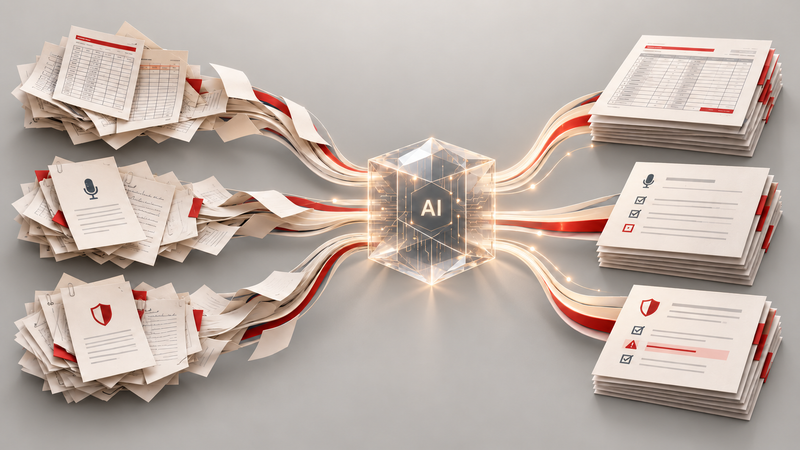
Deloitte Luxembourg’s 2026 commentary describes AI moving beyond pilots into operational use in asset servicing. Examples include pulling together information from different systems, investigating reconciliation discrepancies and spotting unusual prices before they affect a fund’s net asset value, or NAV. www.deloitte.com
Local supplier Algotech also advertises fund accounting software with automated journal entries and NAV production, supported by AI that suggests matches and explains accounting movements. These are supplier descriptions, so they should not be treated as independent evidence of how much time every customer saves. They nevertheless illustrate the work being targeted. www.algotech.lu
Accounting software has performed calculations for years. AI adds the ability to work with less neatly organised information and help investigate differences. An experienced accountant is still needed when a valuation is questionable or a transaction is unusual. But the preparation surrounding those decisions is becoming easier to automate.
The Poland Move Is a Different Story
There is also pressure on Luxembourg employment from moving work overseas. Universal Investment’s restructuring, reported in August, involved around 100 local positions alongside plans to transfer operations to Poland. www.etfstream.com
Lower wages and overall staffing costs are likely to be part of the attraction. Luxembourg’s Aleba union described the restructuring as an international cost optimisation strategy. That is the union’s assessment; it does not establish the company’s precise savings or every reason behind its decision. www.luxtimes.lu
We should therefore avoid counting these positions as jobs replaced by AI. Relocation and automation are separate developments, although both can reduce demand for staff in expensive financial centres. CACEIS was still advertising Luxembourg fund accounting vacancies in September and October, showing that recruitment continues alongside these changes. groupecreditagricole.jobs
From Meeting Notes to Draft Minutes
Anyone who has prepared minutes knows that the work often begins properly after the meeting ends. Notes must be untangled, decisions confirmed and actions assigned. AI can now do much of the initial drafting, leaving a document for someone to check and amend.
Microsoft Teams offers meeting assistance through Copilot, and the UK government has a dedicated tool called Minute. For financial businesses, similar capabilities could save time across board meetings, investment committees and internal reviews. support.microsoft.com
The checking remains important. A suggestion must not become an approved decision simply because an AI summary makes it sound definite. Objections, conflicts of interest and responsibility for actions need to be recorded correctly. The value lies in reducing the drafting work while retaining a reliable approval process.
What Happens to Confidential Discussions?
The obvious concern is what happens to everything said in the room. A finance meeting might involve client details, proposed investments, legal advice or a sensitive staffing decision. Recording the entire discussion creates a much fuller record than traditional minutes, including remarks that would never appear in the final document.
Firms need to know where the information is processed, which providers handle it, who can access it and when it will be deleted. These questions concern the recording and transcript as well as the finished minutes.
Providers are addressing them. Microsoft states that organisational data, prompts and responses in Microsoft 365 Copilot are not used to train foundation models. It also offers access and retention controls. However, the protections depend on the service being used and how the organisation configures it. learn.microsoft.com
There are details worth checking carefully. Copilot can operate without a saved meeting transcript, yet prompts and responses may still be retained under company policies. Participants also need appropriate information about how their data is used. Confidentiality is a manageable consideration, but firms cannot assume that every AI minute taker is suitable for sensitive business. support.microsoft.com
Compliance That Keeps Watch
Compliance is another area where the technology has practical uses. Automated systems can monitor transactions as they happen, flag unusual patterns and help investigators assemble the information needed to understand an alert.
This is not entirely new. Swift announced AI fraud detection for cross-border payments in 2024, while Nasdaq announced generative AI assistance for market surveillance investigations that year. Those earlier announcements help explain the tools available to the industry as it develops its approach in 2026. www.swift.com
The attraction is straightforward: identifying a potential problem sooner gives a firm more opportunity to respond. But an unusual transaction is not automatically an unlawful one. Good monitoring still depends on reliable data, sensible thresholds and investigators who can distinguish a genuine concern from a false alarm.
Will Salaries Come Under Greater Pressure?
Taken together, these developments raise a wider question. If firms can automate more work and move other tasks to lower cost countries, will salaries throughout the finance industry come under greater pressure in the coming years?
The effect might appear through smaller pay rises, lower starting salaries or fewer vacancies, rather than immediate reductions in existing pay. That is a possibility, not an established industry wide outcome. Specialists who handle difficult decisions, maintain client relationships or oversee complex systems may remain in strong demand.
For employees, the uncertainty is understandable. The question of pressure on finance salaries has been raised a few times before. After all, if AI can do more of the work, firms are likely to question how many highly paid staff they need. Financial expertise and professional judgement will still matter, but what that means for jobs and salaries remains uncertain. All we can do is watch how things unfold over the coming years.
Explore our finance, accounting, compliance and governance courses at AI Tuition Hub to build your understanding of these changes and what they could mean for your work.
Published: 4th September 2026.